Joining Forces with Fairphone to Combat the Growing Mountain of E-Waste
The global volume of electronic waste is growing rapidly. In 2025, an estimated 65 million metric tons of e-waste were generated worldwide. New projections indicate that this figure could rise to as much as 196 to 211 million metric tons by 2050. This is a sobering trend that makes it clear we need to change the way we handle electronics.
The problem lies not only in devices breaking down, but also in how quickly we’ve become accustomed to replacing electronics. Yet many devices can last longer, be repaired, or still contain valuable raw materials. To combat the growing mountain of e-waste, it’s important to focus not only on recycling, but also on raising awareness, reuse, repair, and extending the lifespan of products.
That’s why Fairphone and Race Against Waste believe in the power of education and action. By raising awareness about electronic waste among children and their communities from a young age, we’re building a generation that learns to make different choices.
More than 3.5 million devices collected
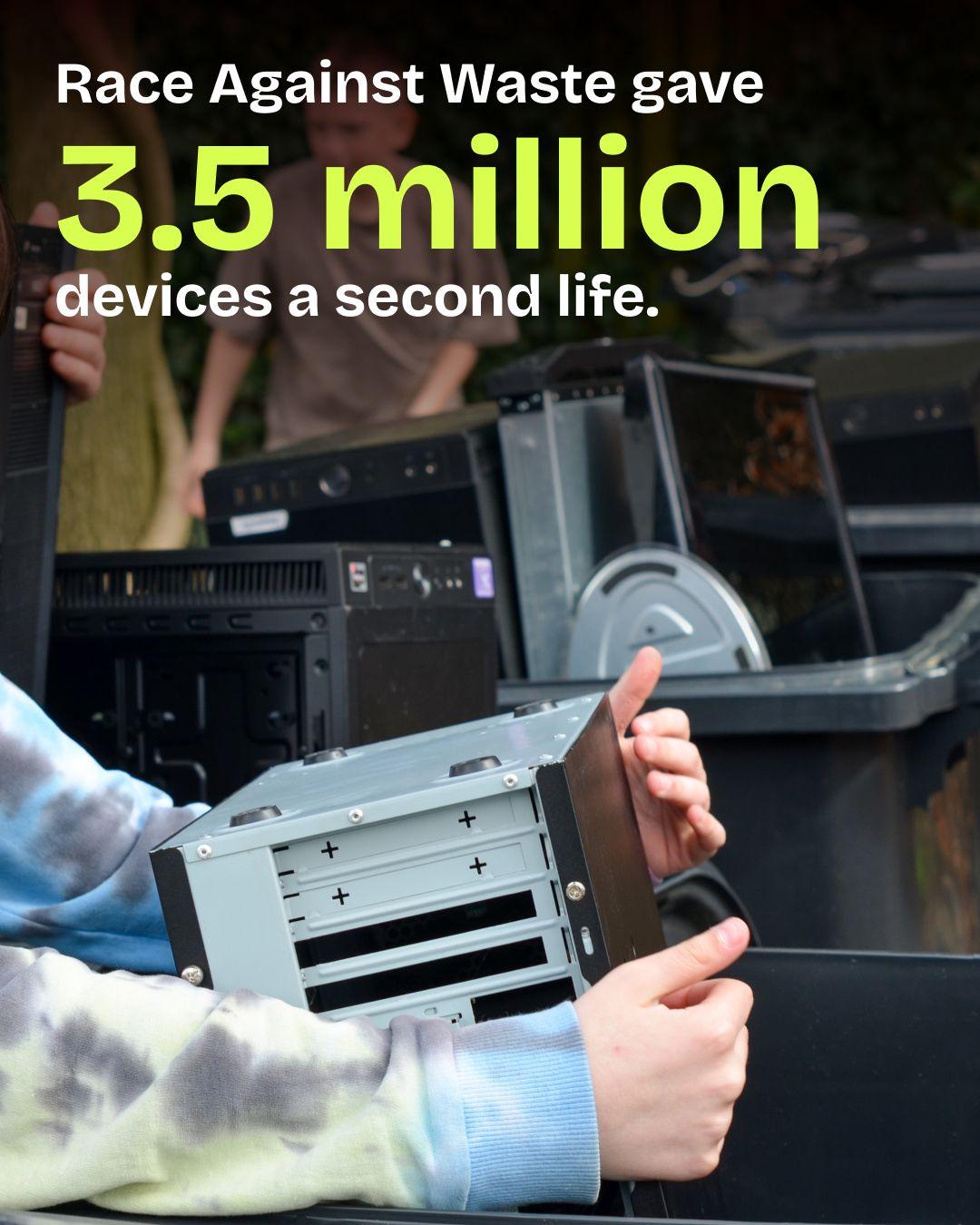
Since the launch of Race Against Waste, nearly 3.5 million electronic devices have been collected through the E-waste Races. More than 70,000 students across Europe have participated in the races. For four weeks, students work to collect old electronics, educate neighbors, and give devices a second life or ensure they are recycled responsibly.
This allows children to experience firsthand what is possible when people take action together. They involve their families, neighbors, and local communities and discover that old electronics aren’t just waste, but also contain valuable materials that can be reused.
A Partnership with International Impact
Fairphone and Race Against Waste have been working together for nearly three years now. This partnership combines Fairphone’s commitment to sustainable, longer-lasting, and more repairable electronics with the educational approach and practical actions of the E-waste Races.
In 2026, we’ll take the next big step together. We’re organizing ten E-waste Races in the Netherlands, Spain, the United Kingdom, and France. This will allow us to reach even more schools and students in different countries.
Moreover, the combined collection results are already higher than those of the previous year. By mid-2026, we had already surpassed the 30,000-kilo mark for collected electronics.
The challenge is immense. Collaboration is essential.
The statistics on the growth of e-waste are sobering. But they also show why it’s so important to work together. By linking sustainable product development with education and concrete action, we can raise awareness and contribute to change.
We’re proud of what we’ve achieved together with Fairphone. And perhaps even more motivated by what we can still accomplish together.
More information
Are you in?!
Do you want to speed up the transition to a circular economy with us? Do you also want to participate in one of our cool Races, or have you been inspired to set up a project together? Then contact us!
The Textile Race is made possible by Kansen voor West and co-funded by the European Union and province Noord-Holland.